Marketing strategies for business growth is a complex analytical process because it’s not simply about promoting a product or service. Marketing is about creating awareness of a product or service that results in consumer demand.
Therefore, before creating a business strategy, a study of the target market is necessary. Study of the market is not like reading a book or attending a webinar. It is about consumer behaviour, competitor analysis and similar product specification in market so that you can derive data to quantify your strategy research on a scale.
Every market is different. A real estate market and the market for baby food are entirely different; hence, marketing strategies for business growthwill differ here. But there are a few general rules for calculating or planning market strategies that can lead to rapid brand growth.
Brand growth is not always about generating leads or increasing a product’s sales volume. It is about creating consumer awareness to boost market share and demand for the product. Therefore, business growth marketing strategies are important, but more important is understanding the aspects that help you in forming marketing strategies for business growth. We have discussed a few related points to Business growth strategieshere.
1. Develop Clear Idea About the Target Audience Before You Market
Effective marketing starts with the comprehensive understanding of the customer. A business cannot create a useful message without knowing its target audience. Customer research is a necessity. It helps businesses understand needs, preferences, buying behaviour, challenges, and expectations of the consumer they want to reach. It also helps marketers avoid generic campaigns, and make monotonous presentations.
Start by creating clear but precise customer profiles based on real market information. You may consider the following factors:
- Age and professional background
- Location and purchasing behaviour
- Business size and industry
- Customer needs and pain points
- Buying triggers
- Preferred communication channels
- Budget and purchasing capacity
A detailed understanding of the target audience makes marketing more focused and campaigns more ROI driven. It can also boost the quality of leads generated through campaigns.
2. Build a Strong and Clear Value Proposition
Customers see countless marketing messages every day. A vague message can easily get ignored. Your value proposition should explain why customers should consider your product or service. It should focus on the problem you solve and the value you provide.
Do not fill your message with complicated claims. Try to keep it as direct and relevant as possible. A strong value proposition should be clear and easy to understand, with the following points.
- What you offer
- Who you serve
- Which problem you solve
- What makes your offering different
- What benefit customers can expect
When customers can understand your product/service’s value swiftly, they feel more inclined to make decisions more confidently in your brand’s favour.
3. Create Content that Solves Customer Problems
Content marketing should be the foundation for your marketing strategy but in a subtle way. Therefore, a content marketing strategy should support every stage of the customer journey with your brand. But you should not create business content simply to fill a content calendar.
Useful content answers questions. It addresses concerns. It provides practical information that helps customers make better decisions.Businesses can develop content around real customer problems. This is the gap where customer/consumer trust is earned.
Although strategizing is creative and there is no definite formula, some productive formats you can consider using:
- Educational Blog Posts
- Industry Reports
- Case Studies
- How-To Guides
- Expert Interviews
- Videos, Webinars & FAQs
- White Papers&Comparison Guides
The focus should remain on usefulness. Promotional content has its place, but customers often respond better when businesses provide value before asking for a sale.
4. Use SEO to Build Long-Term Digital Visibility
When your brand is visible, you can plan your business growth strategieswith better ease. Visibility is one of the requisites and search engine optimisation remains an important part of modern marketing resulting in digital visibility.
A strong SEO strategy helps businesses to be visible against customers’ search for relevant information, products, or services. SEO should not focus only on inserting keywords. Search intent matters just as much. Businesses should create content that matches with users’ intent. An effective SEO strategy can include:
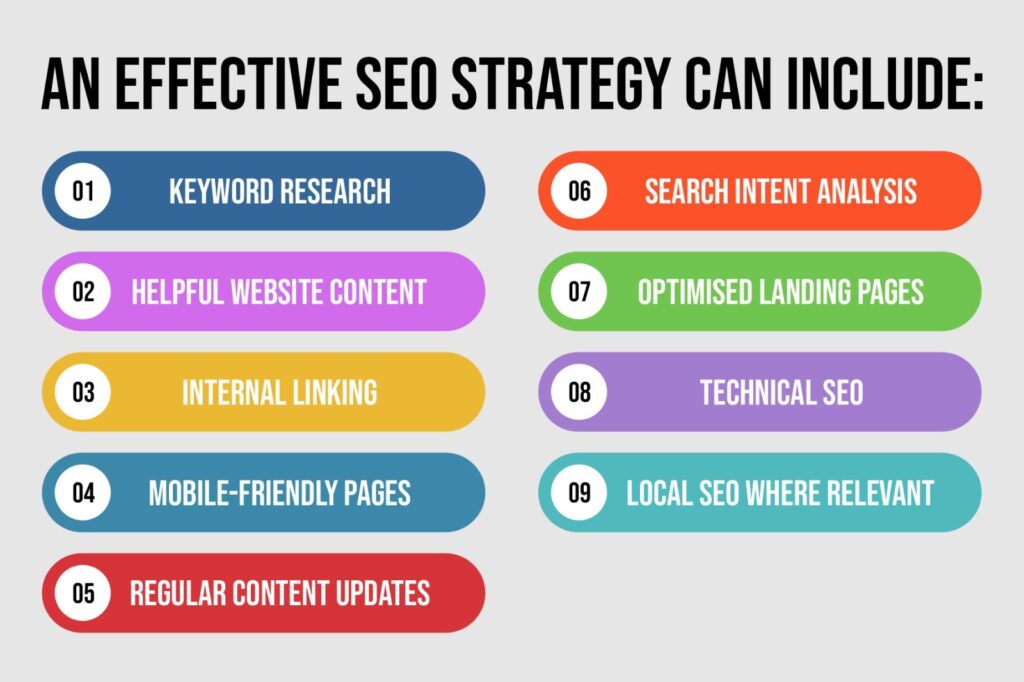
- Keyword Research
- Search Intent Analysis
- Helpful Website Content
- Optimised Landing Pages
- Internal Linking
- Technical SEO
- Mobile-Friendly Pages
- Local SEO Where Relevant
- Regular Content Updates
SEO can take time to produce results. However, quality organic visibility can continue bringing relevant traffic without paying for every individual visit.
5. Turn Social Media into a Relationship-Building Channel
Social media is helpful for businesses in staying connected with existing and potential customers. However, constantly promoting products can make a brand feel repetitive. It is a smart plan to use social platforms to start conversations and demonstrate expertise. A balanced social media strategy can include:
- Educational Posts
- Customer Stories
- Short Videos
- Industry Insights
- Behind-The-Scenes Content
- Product Demonstrations
- Polls And Questions
- Expert Opinions
- Customer Testimonials
Different platforms attract different audiences. Businesses should focus on channels that align with their customers instead of trying to maintain a presence everywhere, and it works as one of the best marketing strategies for business growth.
Read Also:- Human Resource Management
6. Plan for Personalise Email Marketing
Email marketing is one of the viable ways of forming marketing strategies for business growth. Email marketing can become a valuable growth channel when businesses use it thoughtfully. Sending the same message to every subscriber may reduce engagement.Personalisation helps make communication more relevant.
However, businesses willing to boost their marketing drive, categorise their email lists based on a few factors like:
· Trail of Previous Purchases
- Customer Interests
- Website Behaviour
- Location and related Industry
- Lead Stage and Engagement Level
For example, a new lead may need educational information. An existing customer may respond better to product updates or relevant offers.The objective is to send the right message to the right audience at the right stage.
7. Strengthen Your Customer Retention Strategy
Business growth does not depend only on acquiring new customers. Existing customers can also contribute significantly to generate revenue.A strong retention strategy focuses on customer experience after the sale and that ensures.Businesses can improve retention by:
- Providing Responsive Customer Support
- Collecting Customer Feedback
- Offering Useful Product Guidance
- Creating Loyalty Programs
- Sending Relevant Updates
- Addressing Complaints Quickly
- Maintaining Consistent Service Quality
Satisfied customers may also recommend a business to others. This can create valuable word-of-mouth opportunities, which is one of the best marketing strategies for business growth.
Read Also:- Systems Thinking for Strategic Decision-Making
8. Use Data to Improve Marketing Decisions
Marketing planning and decisions should not rely entirely on guesswork or prior marketing experience. Data can reveal what customers are doing and which activities are producing results, so data analysis is a better guide for business growth strategies. Businesses should track metrics that connect marketing activity with business outcomes. Important metrics may include:
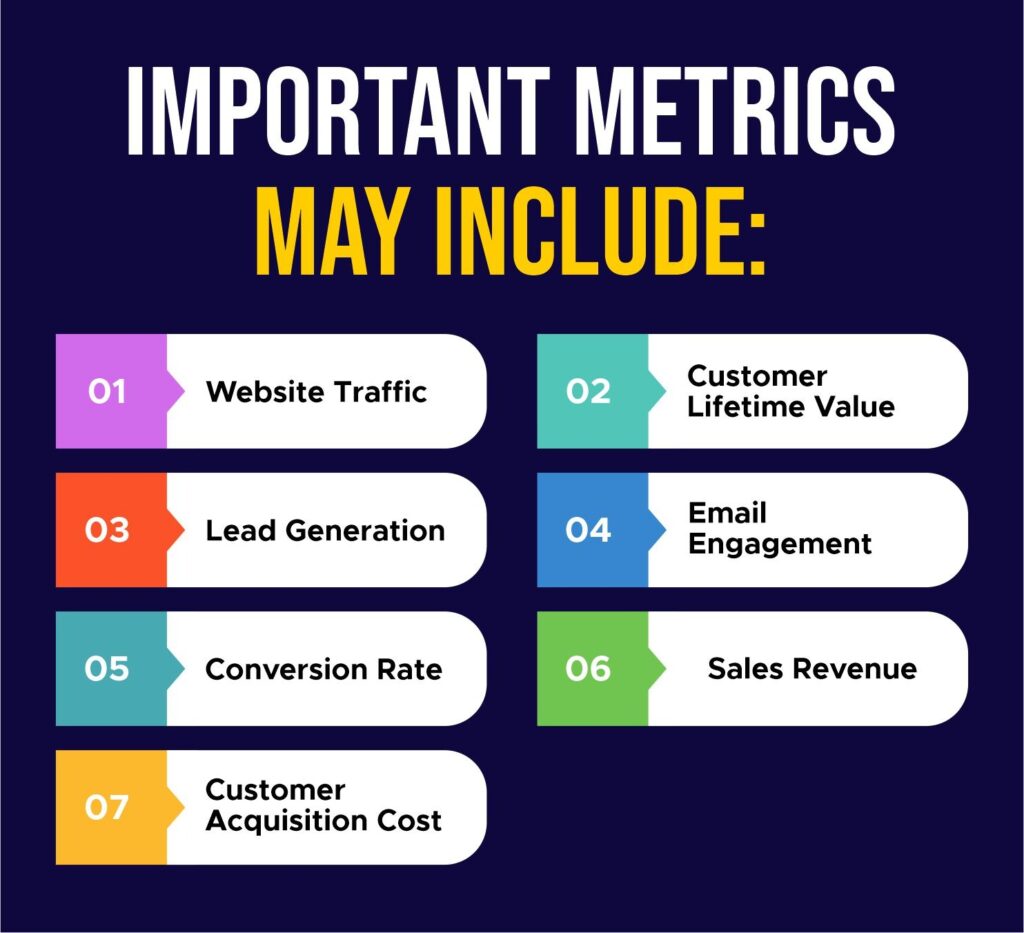
- Website Traffic
- Lead Generation
- Conversion Rate
- Customer Acquisition Cost
- Customer Lifetime Value
- Email Engagement
- Sales Revenue
- Return On Marketing Investment
The exact metrics will depend on the business model and campaign objective. The key is to avoid measuring numbers simply because they are easy to track. A large number of website visits means little if they do not contribute to meaningful business outcomes.
9. Optimise Your Marketing Funnel
All business enquiries are not for immediate conversions. All prospects are not mature immediately. Generally, a customer may go through different stages before making a buying decision. A marketing funnel helps businesses understand this journey; therefore, creating a lead funnel is an important part of developing marketing strategies for business growth. A simple funnel may include:
- Awareness: The customer notices a brand.
- Interest: He/she explores the offering.
- Consideration: The consumer compares relevant options, goes through reviews, etc.
- Conversion: The customer makes a purchase.
- Retention: The consumer continues the relationship and shows brand loyalty.
Each stage requires a different approach. Educational content can work well during awareness. Other Business growth marketing strategies are product comparisons may help during consideration. Offers, consultations, or demonstrations may support conversion.

It is necessary to understand the funnel because it helps businesses avoid using the same message for every customer.
Read Also:- Global Business Strategy in Emerging Markets
10. Test, Measure and Improve Campaigns
There is no proven formula for the success of campaigns. Even a carefully planned campaign may not deliver the expected results. This does not necessarily mean the strategy has failed.Marketing requires continuous testing and data analysis, and testing and data analysis are the pillar doe planning marketing strategies for business growth. Businesses can experiment with:
- Headlines
- Ad copy
- Images and videos
- Landing pages
- Calls to action
- Email subject lines
- Offers
- Audience segments
A/B testing can help compare different versions of marketing assets. The results can guide future decisions.The ultimate goal is not to achieve perfection with the first campaign. It is to learn from each campaign and improve the next one.
11. Integrate Different Marketing Channels
Customers nowadays hardly interact with a brand through a single channel. They may discover a business through search. But later on, visit its website, follow it on social media, and then respond to an email, if any. An integrated marketing strategy creates a more consistent customer experience. Businesses can connect their audiences using the following ways:
- SEO & Content Marketing
- Email Marketing & Paid Advertising
- Social Media Handles
- Events & Webinars
- Direct Sales
Each channel should have a clear role to perform. Integration also helps businesses maintain consistent messaging across customer touchpoints.
Read Also:- Research Proposal Writing for DBA Scholars
12. Focus on ROI, Not Just Marketing Activity
The final strategy is perhaps the most important. Businesses should connect marketing efforts with financial outcomes. Positive Return on Investment (ROI) is the final success parameter for the marketing strategies that paved the way to business growth.
A campaign that generates hundreds of clicks may apparently look successful. But unless the clicks are turned into prospects, there is no guarantee of earning revenue. ROI-focused marketing raises practical questions:
- How much did the campaign cost?
- How many qualified leads did it generate?
- How many leads converted?
- What revenue did those customers generate?
- What was the customer acquisition cost?
- Can the campaign be scaled profitably?
This analytical approach helps businesses identify activities that create genuine commercial value, and it acts as one of the most efficient marketing strategies for business growth.
Conclusion
Marketing strategies for business growth should go beyond visibility and engagement. The real objective is to create a revenue and brand management system that connects customer needs with business goals.
Indeed, there is no formula. but you can start with a clear understanding of your audience. It is a necessity to build a strong value proposition and create useful content.
It will improve search visibility. Also, use social media and email to build relationships. Do not forget measure meaningful metrics and keep improving your campaigns.
Most importantly, it is important to treat marketing as a business investment rather than a mere promotional activity to boost sale revenue.
When strategy, customer understanding, creativity, and data work together, marketing can become a powerful engine for sustainable growth. That is how a business can move closer to becoming an ROI magnet.
CTA
Ready to strengthen your business and marketing skills? Check with IIBM: there are relevant learning programs, which can help you understand marketing strategy, customer behaviour, analytics, leadership, and business growth in a structured way.
FAQs
1. What are the most effective marketing strategies for business growth?
There is nothing called the marketing strategies for business growth because results may vary. However, content marketing, SEO, social media, email campaigns, and targeted advertising help businesses attract customers, increase brand awareness, and generate consistent revenue.
2. How a business can improve marketing ROI?
A Business usually can improve marketing ROI by tracking campaign performance, targeting relevant audiences, optimising budgets, and keeping its focus on the strategies that deliver quantified results.
3. How does the process of digital marketing support business growth?
It's a long process. However, in a nutshell, digital marketing helps businesses reach wider audiences, generate qualified leads, build customer relationships, and increase sales through measurable online campaigns.
4. Why customer retention is considered important for business growth?
Customer retention is important for its multiple utilities. Repeat customers encourage repeat purchases, strengthens brand loyalty, reduces acquisition costs, and creates long-term revenue opportunities through positive customer experiences.
5. How businesses quantify the success of the marketing strategies applied?
Businesses can measure marketing success through the data like conversion rates, customer acquisition costs, website traffic, lead generation, sales growth, and overall return on investment.