The future of business education is always promising; however, it is extremely important to select business education courses that align with your career goals or current occupation. For example, if you wish to pursue a career in Human Resources, you need to upgrade your skills in HR related courses. Similarly, if you wish to succeed in business administration, an integrated an MBA and artificial intelligence course or aDBA and artificial intelligence integrated course will help you advance your career.
Business education is changing with the workplace dynamics, presently. Modern business houses now prefer hiring professionals who understand business fundamentals and can adapt to new technologies, markets, and customer expectations.
A business qualification can help learners in multiple ways. For example, it helps build this combination of knowledge and practical skills. The value of a course depends on more than its qualification. Curriculum, flexibility, practical exposure, industry relevance, and career opportunities also matter.
As a whole, the future of business education is closely linked with changing job requirements. Employers nowadays need people who can analyse information, manage teams, understand markets, and make sound business decisions. Here, we have discussed five important job facts to consider before choosing business education for further career support.
1. Business Education Can Open doors for Diverse Career Roles
One major advantage of business education is the range of career options it offers. Business knowledge applies to almost every industry. Companies need professionals who understand finance, marketing, operations, human resources, sales, and strategy.
A business education program can help learners understand how different business functions work together. This broader understanding can be useful when applying for management and specialist roles. Career opportunities can be found across sectors such as:
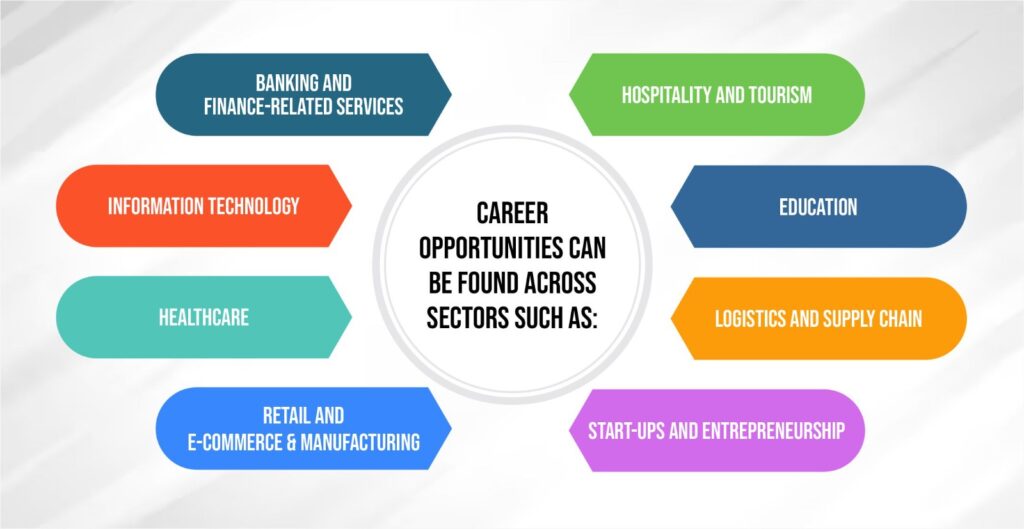
- Banking and Finance-related Services
- Information Technology
- Healthcare
- Retail and E-Commerce & Manufacturing
- Hospitality and Tourism
- Education
- Logistics and Supply Chain
- Start-Ups and Entrepreneurship
Business education also provides a foundation for people who want to start their own ventures. Understanding budgeting, marketing, customer behaviour, and operations can help entrepreneurs make more informed decisions.
The important point is that business education does not lead to only one type of job. It can create a foundation for several professional directions, which is the best objectives of the future of business education.
2. Employers Are Looking for Business Skills Alongside Qualifications
A qualification can open a career door, but skills often determine how effectively a professional performs after entering the workplace.
Modern businesses operate in competitive markets. Managers and employees must solve problems, interpret information, communicate clearly, and work with people from different backgrounds.
Business education can help learners develop these capabilities through academic concepts, case studies, projects, presentations, and practical assignments. Important skills include:
- Business Communication & Leadership
- Financial Understanding
- Strategic Thinking & Problem Solving
- Data Interpretation
- Negotiation
- Team Management
- Decision-Making
- Time Management
Communication deserves particular attention. A manager may understand a business problem but still struggle to implement a solution without clear communication.
The same applies to Leadership. A team management is an intricate task. it requires more than assigning tasks. Leaders need to understand employee expectations, resolve conflicts, delegate responsibilities, and maintain productivity.
Business courses like DBA and artificial intelligence can introduce learners to these areas in a structured manner. Students can then apply the concepts to workplace situations.
For working professionals, this learning can be immediately relevant. A professional working in sales, for example, can apply customer analysis and negotiation concepts to daily responsibilities.
Similarly, an operations professional can use process management principles to identify inefficiencies.
The future workplace will reward professionals who can combine academic knowledge with the ability to provide practical solutions like AI in business education. For the best future in education, learners should therefore examine the skills a program covers rather than focusing only on its qualification title.
3. Technology Is Changing Business Jobs
Technology has become part of almost every business function. It has changed how companies communicate, analyse information, serve customers, and manage operations.
This change is also influencing business education.
Learners preparing for future business careers need to understand how technology affects decision-making. They do not necessarily need to become technology specialists. However, they should be comfortable working with digital tools and technology-driven business processes.
Business education increasingly connects traditional management subjects with areas such as data analysis, digital transformation, business intelligence,and technology management.
Some technology-related business areas include:
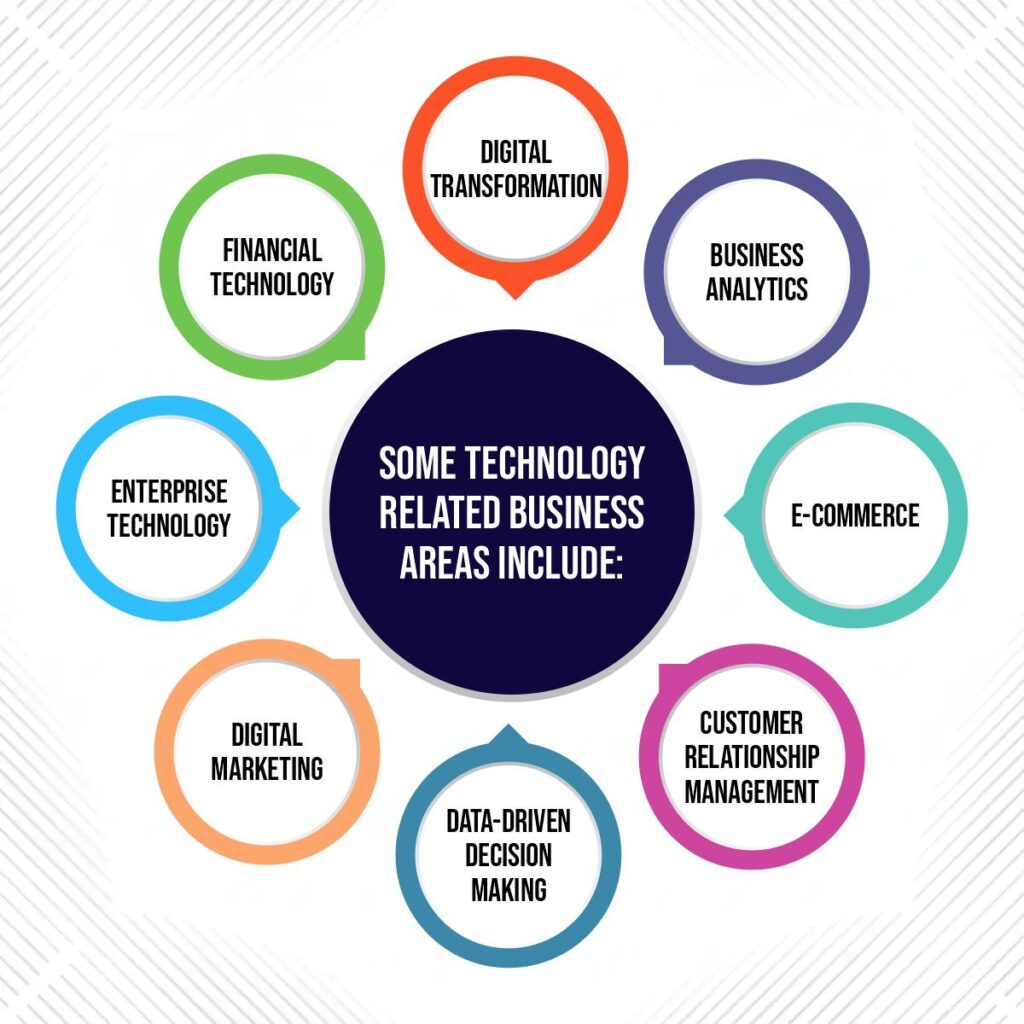
- Digital Transformation
- Business Analytics
- E-Commerce
- Customer Relationship Management
- Data-Driven Decision-Making
- Digital Marketing
- Enterprise Technology
- Financial Technology
Technology also changes the skills required from managers. Managers may need to work with data dashboards, digital collaboration platforms, customer analytics systems, and automated business processes.
For learners, this creates an important consideration when selecting a course. A modern business program should provide an understanding of current business practices and technological developments like AI in business education to secure the future of business education.
Technology should not replace business fundamentals. Finance, marketing, operations, leadership, and strategy remain important. Instead, technology adds another layer to these areas.
For example, marketing professionals now use customer data to understand buying behaviour. Finance teams use digital systems for reporting and analysis. Human resource departments use technology for recruitment and employee management. Therefore, the future of MBA education is also going through a change.
Understanding this relationship between business and technology can help learners prepare for changing workplace expectations.
4. Flexible Business Education Can Support Working Professionals
Many professionals want to improve their qualifications without taking a long break from their careers. Traditional full-time education may not always fit their schedules.
Online business education offers another route. Learners can study from their homes or workplaces and manage their learning around professional commitments. The flexibility turns particularly useful for employees who want to work while pursuing higher education.
Online programs also support learners from different locations. Students do not necessarily need to relocate to access a business education program. Furthermore, key benefits of flexible online learning include:
- The scope of Study around working hours
- Facility to Access learning from different locations
- The privilege to Reduce the need for daily campus travel
- Continue professional responsibilities
- Develop knowledge while working and earning
- Manage learning at an individual pace
However, flexibility also requires discipline. Online learners need to organise their schedules and maintain regular study habits.A good online business education program should therefore offer structured learning resources and clear academic guidance for facilitating the future of business education.
Working professionals can also connect their studies with workplace experience. A lesson on leadership can be considered alongside real management situations. A strategy assignment can be linked with an actual business challenge.
Learners should therefore assess the delivery model carefully. Course structure, academic support, learning resources, assessment methods, and flexibility all deserve attention before enrolment.
5. Lifelong Learning Is Becoming Important for Business Careers
A professional qualification is not necessarily the final stage of business learning. Business environments are subject to continuous change. New technologies, customer expectations, regulations, and market conditions can influence professional responsibilities.
This makes continuous learning increasingly important.A professional who studied business several years ago may need to update their knowledge in areas such as digital transformation, analytics, sustainability, international business, or emerging technologies.
Business education can support this continuing development.Professionals may pursue additional education when they want to:
- Move Into Management
- Change Their Career Direction
- Develop A Specialist Skill
- Strengthen Their Business Knowledge
- Prepare for Senior Responsibilities
- Understand New Business Technologies
- Develop Entrepreneurial Skills
Lifelong learning can also encourage professionals to review their existing knowledge. Experience provides valuable practical understanding, while education can provide structured frameworks for analysing business situations to fortify future of business education.
The combination can be useful for professionals moving into leadership roles.
For example, an experienced employee may understand their organisation’s operations well. Formal business education can help them connect that experience with concepts such as strategic planning, organisational behaviour, financial management, and competitive analysis.
Learners should therefore view business education as part of long-term professional development rather than simply a qualification for the first job.
Read Also:- Earning a Degree While Working Full-Time: Study Smart
What Should You Look for in a Business Education Program?
The future of business education is bright as it offers many opportunities, if the education plan is well-chosen. Not every program will suit every learner.
Before enrolling, you as a working professional should verify the program carefully. Consider these following factors:
| Curriculum: Check thoroughly if the course-subjects match your career interests. |
| Learning Format: Verify with yourself whether online or blended learning suits your schedule. |
| Industry Relevance: Check for practical business concepts and current workplace topics. |
| Faculty: Review the academic and professional background of the faculty members. |
| Assessment: Understand how assignments, projects, examinations, or other assessments work. |
| Career Relevance: Consider how the program connects with your intended career path. |
| Flexibility: Check the scope of access arrangements and study requirements and compare it with your routine. |
| Academic Support: Do the prior homework about the guidance, available during the program. |
The program fee is another practical consideration. You should assess the total program fee and check the payment structure before making a decision.
You need to check the institution’s program information and recognition details carefully before your final selection.
Read Also:- DBA and AI: Future-Proof Your Leadership Skills in 2026
Conclusion
The future of business education is closely connected with the future of work. Employers need professionals who can understand business fundamentals, work with technology, communicate effectively, and respond to changing market conditions.For you, the business education should create both opportunities and responsibilities.
A business education program can provide structured knowledge and help develop skills relevant to different professional roles. Online education can make this learning more accessible to working professionals who want to continue their careers while studying.
Build Your Business Knowledge with IIBM Online Business Education
If you are planning to advance your business career without putting your professional journey on hold, explore IIBM online business education. Its online learning approach can help working professionals and students build business knowledge while managing their existing commitments.
Explore programs that match your career goals in a way that help develop the knowledge needed to participate confidently in the evolving business environment.
Start your learning journey with IIBM and take a focused step towards your future in business.
FAQs
1. The Future of Business Education - What is it?
Business education will focus on digital skills, strategic thinking, leadership, data analysis, practical learning, and knowledge relevant to changing workplace requirements.
2. Why is Online Business Education being Becoming Popular?
Online business education offers flexible schedules, remote access, diverse learning resources, and opportunities for working professionals to continue their careers while studying.
3. What Skills Will Business Graduates Need in The Future?
Future business graduates will need communication, leadership, problem-solving, financial knowledge, digital skills, strategic thinking, teamwork, and sound decision-making abilities.
4. How will Technology Influence Business Education?
Technology will influence course delivery, business analysis, classroom interaction, assessments, and learning resources while helping students understand technology-driven workplace practices.
5. Are Business Educational Courses Useful for Working Professionals?
Yes, business education can strengthen management knowledge, improve professional skills, support career advancement, and prepare working professionals for greater workplace responsibilities.