
Table of Contents
DBA thought leadership is not about a course to join. It’s all about gaining expertise in thought leadership. A Doctor of Business Administration (DBA) is a structured process for gaining professional expertise in areas like strategic planning, identifying problems (if any), and solving business problems with the help of data analysis. A DBA-qualified professional gains Leadership developmentability with research-based analytical skills.
What is Thought leadership? How does it help?
Thought leadership is an advanced skill that differentiates an average manager from a DBA-qualified professional. DBA for executives is not about sharing thoughts on a specific situation. An industry expert DBA-qualified leader can understand market developments. They also connect research with practical business situations.
A professional with DBA thought leadership is confident and productive in understanding market trends and can offer solutions after customized research, analysis, academic study, and practical business application.
DBA thought leadership is the power of a successful professional. The skill cannot be developed overnight. But it is practiced with a clear foundation and aim. Some of the potential qualities of a leader may involve the following:
- Strong knowledge of a specific business area.
- Practical understanding of industry problems.
- Evidence-based opinions.
- Original research and insights.
- Consistent knowledge sharing with peers.
- Ability to explain complex subjects with a simple approach.
Professionals should avoid becoming an expert in everything. A focused area often creates stronger recognition.
For example, a senior professional may focus on digital transformation, organizational leadership, financial management, sustainability, healthcare management, or supply chain strategy. The narrower the area, the easier it becomes to build specialized knowledge. Further, it will be useful to discuss how a DBA for executives’ curriculum can equip a business leader with better business insight.
How the DBA Research is applied to Find Real Industry Problems?
Research is at the heart of a DBA course. Unlike purely theoretical academic work, applied business research often focuses on problems faced by organisations.This approach creates an important opportunity for professionals. They can select research topics connected with their industry experience.Suppose a professional works in retail. They may notice that customer retention is falling despite increased spending on loyalty programmes. This could become a research question.
Another professional may work in human resources and notice difficulties in retaining skilled employees. That issue could lead to research on employee engagement, leadership, workplace culture, or career development.A useful DBA research problem should have practical value resulting in DBA thought leadership. However, professionals can start their process with the following points.
- Observing and evaluating recurring problems in their industry
- Studying recent academic research
- Reviewing industry reports and developing practical and analytical insights.
- Speaking with experienced professionals for learning visions.
- Identifying gaps in current business practices and procuring solutions.
- Comparing different approaches to the same problem and assessing the best out of many.
This process can turn a workplace-experience into meaningful research.The resulting findings can also become the foundation of future thought leadership content.
How to Build Expertise in a Specific Business Management Niche?
Industry experts usually have a recognisable area of expertise. They are known for understanding a particular subject better than most people in their professional network. A DBA can help professionals develop this specialisation through focused research.For instance, someone researching strategic leadership can gradually build knowledge around leadership effectiveness, decision-making, organisational performance, and executive behaviour.
The same approach applies to other areas.Possible specialisations include:
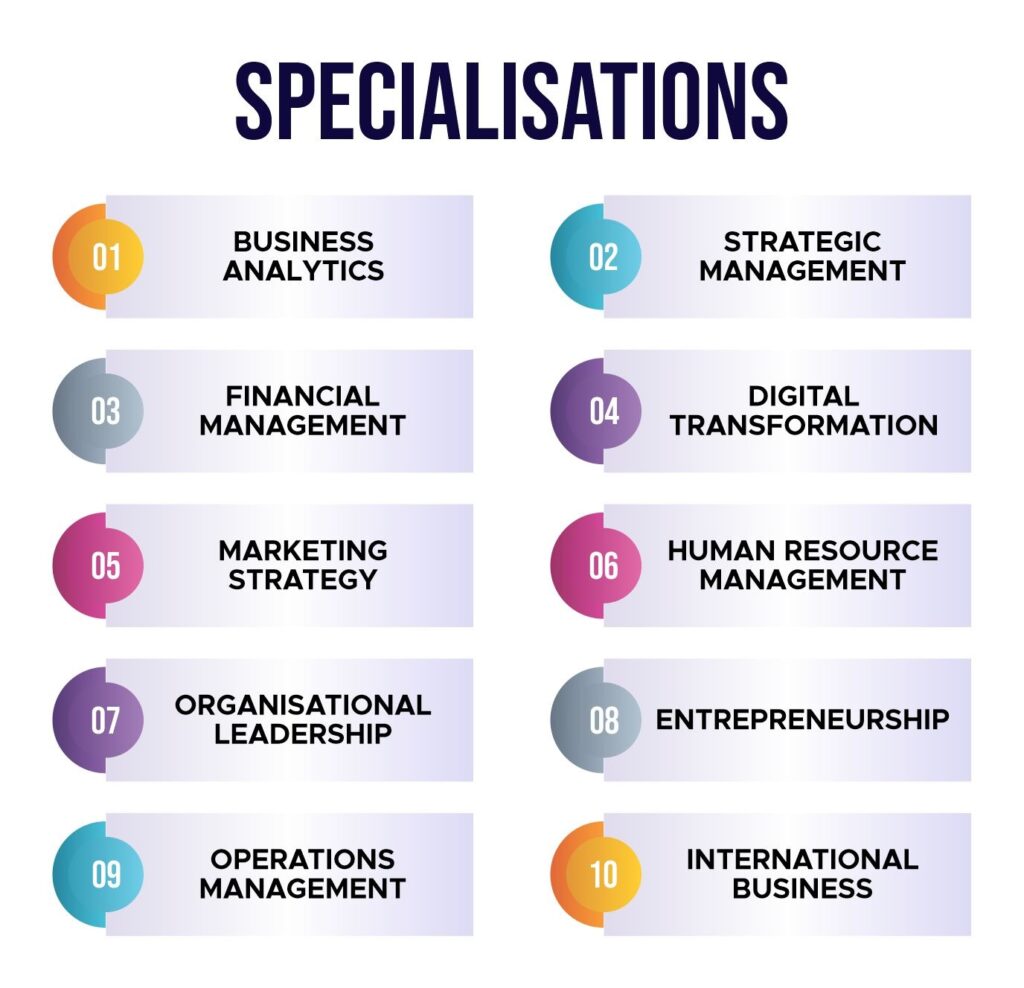
- Business analytics
- Strategic management
- Financial management
- Digital transformation
- Marketing strategy
- Human resource management
- Organisational leadership
- Entrepreneurship
- Operations management
- International business
Specialisation does not mean conscious overlooking in broader business developments. It means having a clear professional identity and a goal.
A professional known for one subject can become a preferred source for industry discussions. Journalists, event organisers, business groups, and professional networks may also notice their expertise in Leadership development skill.The goal is not simply to collect qualifications. The ultimate objective is to develop knowledge that can be applied, discussed, and shared.
How toTurn Research Findings into Useful Business Insights?
Research becomes more valuable when professionals can explain its practical meaning. This is the best part of thought leadership.
A DBA for executive’s research project may produce detailed findings. However, industry audiences may not want to read a lengthy academic document. They want to understand what the findings mean for their organisations.
This is where communication skills become important. Professionals can convert research into different forms of knowledge sharing. The most proven ways for developing DBA thought leadership are:
- Publishing LinkedIn articles at least twice a week.
- Adding Industry blogs in forums.
- Sharing Research summaries.
- Webinars and Conference presentations can create a clear brand management strategy.
- Business case studies will increase thought leadership.
- Expert interviews are reliable resources.
- Industry reports and professional newsletters are a trusted way to gain insight about the contemporary business landscape and measure the challenges.
The content should remain connected to evidence. For example, instead of simply saying that employee engagement improves performance, an expert can explain what their research found, which factors mattered, and how managers can respond to gain success in this niche.
This process finally creates a stronger connection between DBA research and business practice. Simple language is a necessity, and the ability to present complicated ideas in a simplified way. A strong thought leader makes useful knowledge easier to understand.
Develop a Visible Professional Reputation: How to attain the Goal?
Expertise needs visibility. Excellent research may remain unnoticed if nobody knows about it.Professionals should therefore create opportunities to share their knowledge with relevant audiences.This does not mean publishing content every day. Consistency matters more than volume.
A professional can select two or three channels that suit their audience. For example:
- Publish one detailed article each month
- Share short research insights on professional platforms
- Attend industry conferences
- Participate in panel discussions
- Contribute expert comments to publications
- Join professional associations
- Present research findings at academic events
- Participate in business webinars
The subject should remain consistent.If a professional wants to become known for strategic leadership, most of their public contributions should relate to leadership, strategy, organisational performance, or connected subjects.

Over time, this creates recognition.People begin to associate the professional with a particular area of knowledge. That association is an important part of thought leadership.
What are the benefits of Connecting Academic Knowledge with Executive Decision-Making?
Senior professionals need more than theoretical knowledge. They must understand how ideas work in real organisations. This is the privilege of DBA thought leadership. This is one of the strongest areas where DBA study can contribute.
Applied research encourages professionals to examine business situations closely. They need to assess evidence, interpret findings, and consider practical implications.
This approach can improve executive decision-making backed by DBA thought leadership. A research-led professional should ask and introspect on the following points:
- What evidence supports this decision?
- What problem is in the focal point to solve?
- What do customers or employees really need?
- What does existing research tell us?
- What risks could this strategy create?
- How can the outcome be quantified?
- Can the proposed solution work at measurable scale?
These questions can improve the quality of business discussions. Thought leadership also becomes stronger when ideas are connected to measurable outcomes.
For example, an expert discussing customer experience can consider retention, satisfaction, repeat purchases, service quality, and customer lifetime value. This makes the discussion more practical. The outcome will be excellent: instead of an opinion, professionals share knowledge backed by business insight and hands-on experience originated from DBA thought leadership.
Read Also:- Online Degrees in 2026: Advance Your Career Online
Practice Continuous Learning as Part of Career: How does it Help in Thought Leadership
Industry expertise is actually unlimited and has no fixed finishing line. Markets keep on changing. Customer expectations shift. New Consumer behaviour sprouts. New regulations emerge. Business models evolve. Professionals must continue learning even after completing a DBA. A doctoral qualification can provide a strong foundation. Continuous learning keeps that foundation relevant with improved thought leadership.
In today’s business landscape, professionals should never give up on their habit of research and study. Constant study and research can maintain their expertise by reading articles, attending conferences, following industry developments, and reviewing new business practices. A simple learning routine can help:
- Reading relevant research every week is a good practice.
- It is highly recommended to follow respected industry publications
- Reviewing major market developments helps in finding consumer trends.
- It is smart to attend selected conferences and webinars.
- Discussing ideas with other professionals can unfold several market insights.
- Revisiting older assumptions and assessing them helps in understanding market trends.
- Update professional knowledge regularly
- Record new research questions
Professionals should also remain open to upgrading or modifying their views. Ace professionals do not defend every old opinion. They adjust their thinking when better evidence becomes available. This approach creates intellectual credibility and promotes thought leadership.
The talent also makes DBA thought leadership more useful. People trust experts who can explain both what they know and where uncertainty remains.
Conclusion
A DBA course can be more than another qualification on a professional profile. It can become a foundation for building industry expertise via thought leadership.Thought leadership develops when advanced knowledge meets practical experience. DBA research can help professionals examine real business problems, explore research gaps, and develop evidence-based solutions.
The next step is sharing those insights with the right audience. Articles, conferences, webinars, research papers, and professional discussions can help turn expertise into professional influence.
Becoming an industry expert takes time. It requires focus, research, communication, and continuous learning.
For working professionals, a DBA can provide a structured environment to develop these capabilities while connecting academic research with real business challenges in developing DBA thought leadership.
Take the Next Step with a DBA
If you want to strengthen your business expertise and build a stronger professional voice, a DBA can be a valuable next step. Choose a programme that supports applied research, advanced management knowledge, and practical business problem-solving.
Explore a DBA program and start developing the expertise, research capability, and professional authority needed to become a recognised industry expert.
FAQs
1. Is it true that a DBA Course assist professionals developing thought leadership?
A DBA develops research, analytical, and strategic skills, helping professionals generate practical insights, solve industry problems, and share informed perspectives with wider audiences.
2. A DBA degree help professionals become recognized industry experts?
Yes. A DBA strengthens professional credibility through specialised research, practical knowledge, publications, and evidence-based insights that demonstrate expertise within a chosen business field.
3. What’re the skills professionals often develop through the DBA research and thought leadership?
DBA research develops critical thinking, data analysis, strategic decision-making, problem-solving, academic writing, communication, and leadership skills that support stronger professional influence and credibility.
4. How does DBA research help in better business decision-making?
DBA research examines real organisational challenges and provides evidence-based findings, enabling professionals to identify opportunities, reduce risks, improve processes, and make informed strategic decisions.
5. How DBA graduates can use research to influence their industry?
DBA graduates can publish research, present findings, advise organisations, participate in industry forums, and share practical insights that encourage innovation and improved business practices.