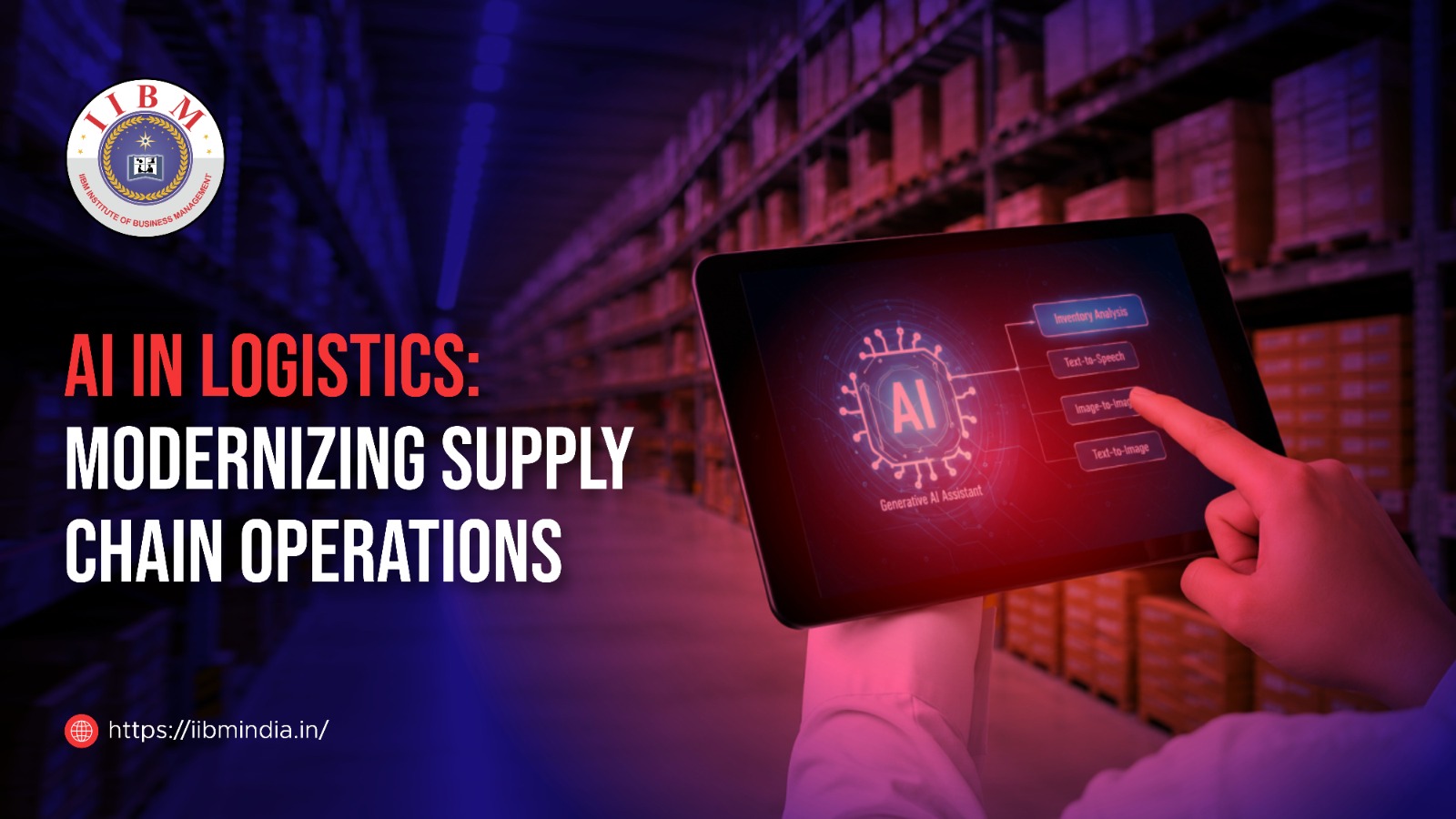
AI in Logistics is a game-changer. It helps logistics arrangements or logistics service providers improve operational efficiency, predict demand, optimize routes, and automate routine tasks.
AI in Logistics enables organizations to process large volumes of data and make informed decisions faster than traditional systems. As a result, the supply chain, which is the backbone of every trade system, becomes more consistent and flawless.
As supply chains are becoming complex, AI-powered logistics is playing a key role with advanced technology. AI tools in logistics can drive innovation and procure competitive advantages. As a result,organizations that adopt intelligent AI logistics solutionscan improve customer satisfaction, reduce costs, and build resilient supply chain networks.
How does AI in Logistics Affect Work Environment?
Before we plunge into the impact of AI on logistics, let’s discuss the areas of logistics management that AI can improve. Unlike conventional logistics systems, AI logistics technology can unceasingly adapt to changing conditions. It can process information from multiple sources and generate insights in real time.
AI Technologies Used in Different Logistics Segments
- Machine learning
- Predictive analytics
- Natural language processing
- Computer vision
- Robotics and automation
- Intelligent scheduling systems
Together, these technologies help organizations streamline logistics operations and improve overall supply chain performance, which leads to better customer satisfaction and enhanced market share.
Why AI in Logistics is a Game Changer?
The logistics industry procures huge amounts of data daily. For example, Shipment records, inventory information, vehicle tracking data, customer orders, and supplier updates create a constant flow of information.
Managing this data manually is difficult and time-consuming. AI helps businesses convert raw data into actionable insights.
Several Factors Are Accelerating AI Logistics Solutions:
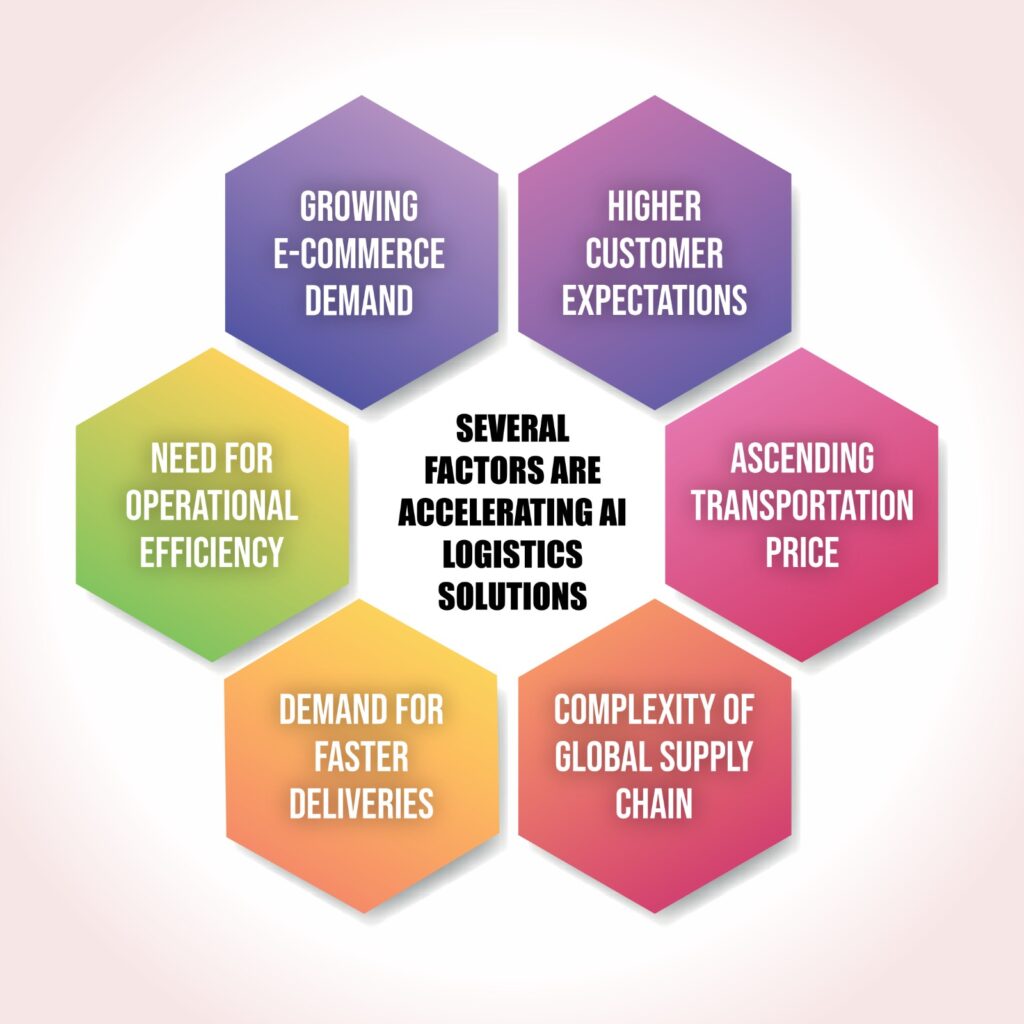
- Growing e-commerce demand
- Higher customer expectations
- Ascending transportation price
- Complexity of Global supply chain
- Demand for faster deliveries
- Need for operational efficiency
Organizations that fail to modernize may face challenges to offer competitive service standard in a rapidly evolving market.
AI in logistics: Impacting Operation is Supply Chain
AI systems, after installation, can collect and streamline information from various sources throughout the supply chain. These sources may vary. However, some of the common examples are warehouse sensors, GPS devices, transportation management software, inventory systems, and customer databases.
The collected data is analysed thoroughly using an advanced and customized algorithms. These algorithms identify patterns, detect anomalies, and generate predictions.
For example, an AI system may analyse weather forecasts, traffic conditions, and delivery schedules simultaneously. The system can recommend the most efficient route for a shipment based on the analysis.
The ability to process information in real time enables businesses to make faster, more accurate decisions.
Read More:-How to ChooseTop Leadership Programs 2026| Career Boost
Route Optimization and Transportation Planning
Transportation attracts a large expense in logistics operations. Delays, inefficient routes, and fuel consumption can significantly increase the operational costs.
AI in logistics improves transportation planning by analysing the following points:
- Current Traffic Situation
- Road Closures within the Route
- Weather Predictions on the Delivery Date
- Capacity of the Concerned Vehicle
- Delivery Timelines
- Fuel consumption patterns
Traditional route planning mostly relies on fixed schedules. AI logistics solutions related systems continuously strive to adjust routes in response to changing conditions.
Consequently, companies can reduce delivery times, lower fuel expenses, and improve customer satisfaction.
Route optimization helps organizations in minimizing environmental impact by reducing unnecessary mileage and fuel usage.
Demand Prediction and Supply Chain Planning
Precise demand prediction is one of the most important aspects of supply chain management. Poor forecasting can lead to inventory shortages or excessive stock levels.
AI-powered forecasting systems analyse historical sales data, seasonal trends, consumer behaviour, and market conditions.
How These Systems Can Help a Supply Chain?
These AI-powered logisticsprediction systems help businesses in procuring answers for critical questions:
- Which products will experience higher demand?
- When should inventory be replenished?
- The accurate Stock allocation.
- Which regions are expected to have additional resources?
By improving forecast accuracy, AI logistics technology helps organizations maintain inventory balance while reducing waste and storage costs.
AI-Driven Inventory Management
Inventory management creates impacts on profitability and customer satisfaction. If there is excess inventory, it increases storage costs. On the other hand, insufficient inventory can result in lost sales.
AI in Logistics can help inventory management. It works with continuous monitoring and smart application of predictive analysis.
Benefits of AI driven Logistics Tools are:
- Real-time inventory visibility
- Low amount of stockouts
- Reduced carrying costs
- Improved order coordination
- Better utilization of warehouse
AI-powered logistics systems can automatically identify purchasing trends and recommend inventory adjustments before problems occur.
This proactive approach helps organizations maintain optimal stock levels across multiple locations.
Read More:- Business Analyst Career in 2026: Skills & Growth Scope
Warehouse Automation and Smart Fulfilment
Warehouses play a critical role in modern logistics operations. AI-powered automation is transforming how warehouses function.
Many organizations now use intelligent systems to perform tasks such as:
- Product identification
- tracking of Inventory
- Order picking
- Sorting and packaging
- Quality inspections
Computer vision technologies can recognize products and verify order accuracy. Automated robots can move goods throughout warehouses with minimal human intervention.
These innovations improve productivity and reduce operational errors.
Warehouse automation also enables businesses to process larger order volumes without significantly increasing labour requirements.
Predictive Maintenance for Logistics Assets
Vehicle breakdowns and equipment failures are two reasons that can disrupt logistics operations and create costly delays.
AI logistics technology helps organizations prevent these issues through predictive maintenance.
Sensors installed on vehicles and equipment continuously collect performance data. AI algorithms analyse this information to detect early signs of wear and potential failure.
The advantages of Predictive maintenance
- Reduced downtime
- Lower repair costs
- Improved equipment lifespan
- Better fleet reliability
- Enhanced operational efficiency
Instead of waiting for the malfunctioning of equipment, businesses can schedule their maintenance at the most appropriate time.
This approach reduces disruptions and improves overall productivity.
Improving Customer Experience Through AI
Customer expectations are dynamic and never ending. Consumers now expect faster deliveries, accurate tracking information, and seamless communication.
AI helps logistics providers meet the customer expectations through intelligent customer service solutions.
Common AI in Logistics Tools
- Chatbots and Virtual Assistants – AI-powered chatbots answer customer inquiries and provide shipment updates around the clock.
- Real-Time Tracking – Customers receive accurate information regarding shipment location and estimated delivery times.
- Personalized Communication – AI systems analyse customer preferences and provide tailored updates and recommendations.
These capabilities improve transparency and strengthen customer relationships.
Risk Management and Supply Chain Resilience
Supply chains face numerous risks, including weather disruptions, transportation delays, supplier issues, and geopolitical events.
AI logistics technology helps organizations identify potential risks before they escalate into major problems.
AI systems can detect warning signs and predict disruptions by analysing real-time and historical data.
- Corrective Remedies
- Adjusting transportation routes
- Reallocating inventory
- Identifying alternative suppliers
- Revising the delivery schedules
This proactive approach improves supply chain resilience and business continuity.

Challenges of Implementing AI in Logistics
AI adoption may create several challenges. These are:
Data Quality Concerns – AI systems depend on accurate and reliable data. If poor-quality data is used, it can reduce prediction accuracy and system performance.
Integration Complexity – Many organizations operate legacy software. These software tools may not integrate easily with modern AI platforms.
Initial Investment Costs – AI solution implementation often requires investment in infrastructure, software, and employee training.
Skills Gap: Organizations may struggle to find professionals with expertise in AI, data analytics, and automation technologies.
Addressal of these challenges requires professional expertise, careful planning, and long-term commitment.
It is expected that demand for AI-trained professionals will increase in the near future.
The Future of AI in Logistics
AI in logistics is no longer is no longer an emerging technology within logistics framework. It has become a strategic necessity for organizations seeking growth and efficiency.
As technology advances, AI systems will become more intelligent, autonomous, and capable of handling increasingly complex logistics tasks.
Future Probable Logistics Operations
- Advanced automation
- Accurate decision-making
- Improved prediction accuracy
- Clarified visibility
- Reduced operational costs
- Stronger supply chain resilience
Organizations investing in AI today, will surely be able to navigate future market challenges and opportunities.
Conclusion
AI (Artificial Intelligence) is improvising logistics by making it smarter, faster, and more efficient supply chain operations. From route optimization and demand forecasting to warehouse automation and predictive maintenance, AI-powered logistics creates value across every stage of the logistics process.
Businesses implementing AI can improve operational efficiency, reduce costs, enhance customer experiences, and strengthen supply chain resilience.
As the global supply chains continue to evolve, AI in logistics is expected to render an increasingly important role in logistics to drive long-term business success.
FAQs-
1. How Does AI Improve Efficiency in a Logistics Operation?
AI tools in logistics can help in multiple way. For example, it can automate route planning, demand forecasting, and inventory management. It reduces delays, lowers operational costs, and improves supply chain performance through data-driven decisions.
2. What is the Best Benefit of the AI in Logistics?
AI enhances delivery accuracy, optimizes warehouse operations, predicts disruptions, and improves customer satisfaction. Businesses gain faster operations and better resource utilization.
3. An AI tool Reduces Transportation Costs in Logistics-Is it True?
Yes. AI analyses traffic patterns, fuel consumption, and delivery routes. It identifies cost-saving opportunities and helps logistics companies reduce transportation expenses significantly.
4. How can an AI Tool Transform Warehouse Management?
AI-powered logistics tool powers smart inventory tracking, automated picking systems, and demand forecasting. It increases warehouse productivity while minimizing human errors and stock shortages.
5. Is there any Future of AI in Logistics and Supply Chains?
AI will drive autonomous vehicles, predictive maintenance, and real-time supply chain visibility. Companies will achieve greater agility, efficiency, and competitive advantage.