Domestic HRM vs International HRM: Is there actually a big difference? HRM stands for Human Resources Management, we all know. But what is special about International HRM? What is the scope of it, and why is the topic now trending?
Human resource management is a critical part of business management because, under this stream, students/professionals manage human assets to drive optimal employee performance, which is directly linked to business growth. Irrespective of the business segment, a business needs an expert HR team; hence, HRM-qualified professionals are always in good demand.
As businesses grow across borders, HR functions become more complex with changed demographics. HRM professionals need to understand different labour markets, cultures, and regulations. The broader spectrum of International Human Resource Managementcreates a significant gap between domestic and international HR practices.
Understanding Domestic HRM vs international HRM helps organizations build better workforce strategies. It also helps students and professionals gain deeper insights into global business operations.
We will discuss here the major differences, scope, functions, and challenges of both the HRM approaches. Keep trading till the end for career related information.
What Is Domestic HRM?
Domestic Human Resource Managementfocuses on managing employees within a single country. The organization conducts all business operations within national boundaries.
HR managers handle recruitment, training, compensation, employee relations, and performance management. They follow one country’s labour laws and employment standards.
Companies operating locally rely on domestic HRM to maintain workforce productivity. The system remains simpler because managers deal with a single culture and a single legal framework.
When discussing Domestic HRM vs international HRM, domestic HRM is the simpler side of workforce management.
What Is International HRM?
International HRM is the management of HR operations across multiple countries. Multinational companies use this approach to coordinate global operations and keep them synchronized.
HR professionals handle expatriates, local employees, and third-country nationals. They manage cross-cultural communication and international assignments.
International Human Resource Managementinvolves additional responsibilities compared to domestic HRM. For example, in the International HRM module, HRM professionals address immigration requirements, taxation issues, and international labour regulations.
The difference between domestic and international HRM becomes important as organizations expand beyond national borders and begin employing staff from diverse demographics.
Read More:- How to ChooseTop Leadership Programs 2026| Career Boost
Key Difference Between Domestic HRM and International HRM
Several factors are there, which can explain the difference between domestic HRM and International Human Resource Management, which can help in discovering the topic: domestic HRM vs international HRM.
1. Geographical Coverage: Domestic Human Resource Managementoperates within one country. International HRM manages employees across several countries.
2. Workforce Diversity: Domestic HRM handles a relatively homogeneous workforce. International HRM works with employees from different cultures and ethnicity.
3. Legal Environment: Domestic HRM follows one legal system. International HRM complies with multiple labour laws and regulations.
4. Compensation Structure: Domestic HRM structures salary in line with the target local standards. International HRM creates compensation packages for multiple countries.
5. Risk Factors: Domestic HRM faces fewer risks. International HRM handles political, economic, and cultural uncertainties in HRM operations.
These dissimilaritiesclarify the basic contrast in the designated topic: Domestic HRM vs International HRM.
Scope of Domestic HRM
Domestic Human Resource Managementoperations deal with a wide range of employee management activities. Some of them are listed below.
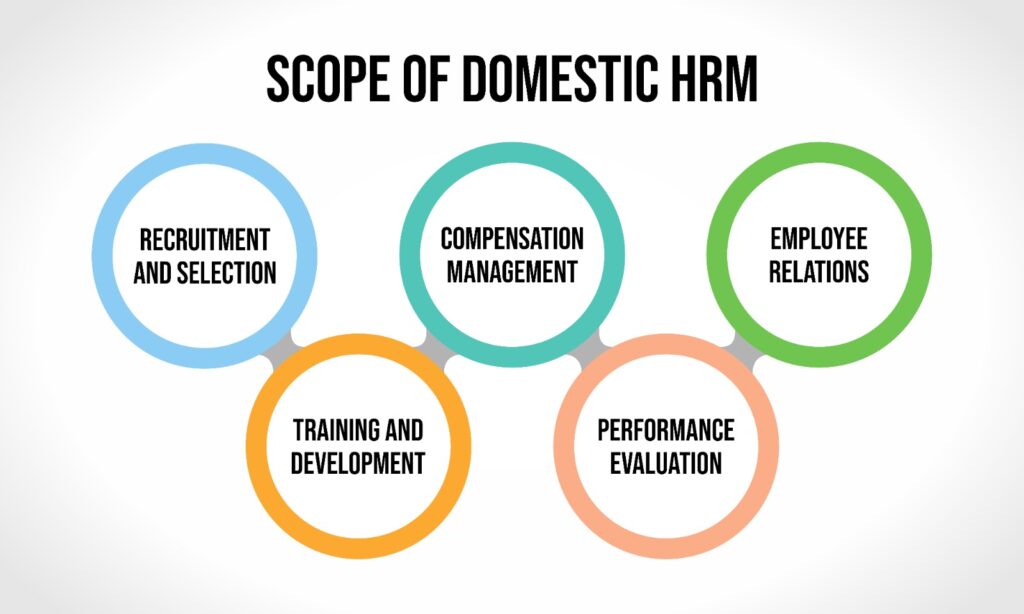
- Recruitment and Selection: HR teams identify suitable candidates and fill vacant positions. It is called talent procurement.
- Training and Development: Organizations offer training programs to improve employee skills. HRM conducts the program through structured learning programs.
- Compensation Management: HR departments design fair salary and benefit packages for employees.
- Performance Evaluation: Managers assess employee performance and provide feedback.
- Employee Relations: HR professionals maintain positive relationships between employees and management.
The scope of Domestic HRM remains broad, but it is manageable by trained HR professionals. This aspect highlights the key concerns in the discussion of domestic vs international HRM.
Scope of International HRM
International Human Resource Management extends beyond traditional HR functions, which are commonly described as
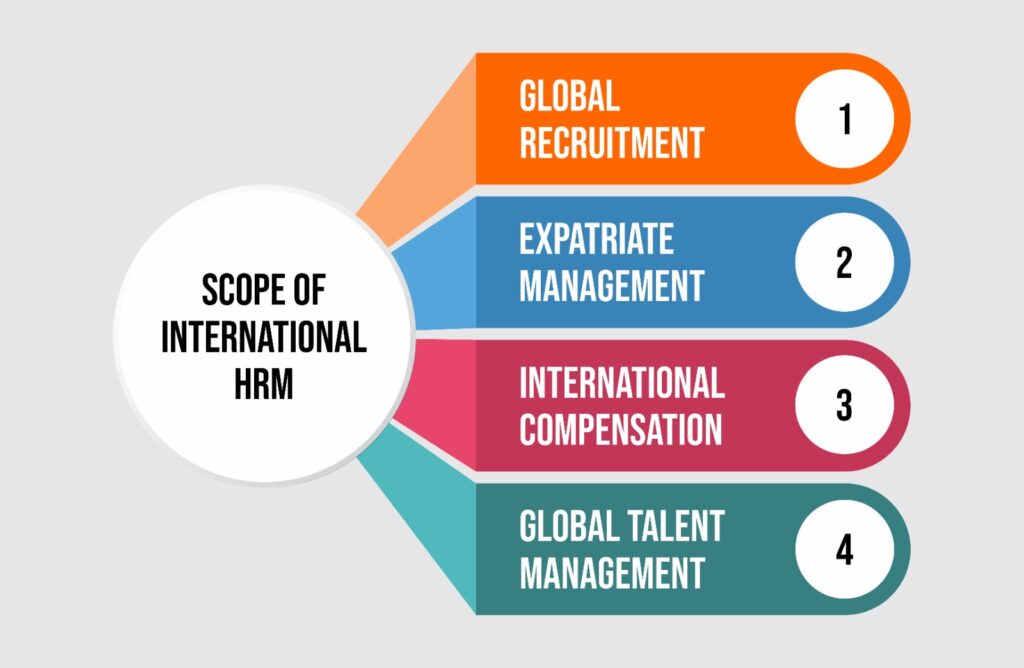
- Global Recruitment: Companies hire talent from around the world.
- Expatriate Management: Organizations support employees who work abroad.
- Cross-Cultural Training: Employees learn how to work effectively in diverse environments.
- International Compensation: HR teams create competitive compensation packages for global assignments.
- Global Talent Management: Organizations identify and develop future leaders worldwide.
The broader scope makes Domestic HRM vs International HRM an important area of study for modern businesses and HRM professionals.
Challenges in Domestic HRM
Domestic HRM may face several workforce management challenges. Some of them are like:
- Talent Shortages: Companies often struggle to find skilled employees.
- Employee Retention: Organizations may face challenge to retain good workforce for long. There can be several reasons, however, competent HRM policies can keep this problem under control.
- Workplace Conflicts: Workplace conflict is a recurring problem that often demotivates employees. HRM experts can address disputes and maintain harmony within the workplace in employee relation to pace the workflow.
- Regulatory Changes: In a country, labour laws often change. HR teams always remain updated about the amendment, and they implement the modification in the workplace.
- Skill Development: Organizations need continuous training programs to meet industry demands. HR teams work on it and arrange the trainings.
These HRM challenges affect organizational performance and growth unless the team can handle it efficiently.
Challenges in International HRM
If we oversee International HRM functions, we often get to see more complex issues. Some of the issues are:
- Cultural Differences: Employees from different cultures may hold different expectations.
- Language Barriers: Communication gaps can affect teamwork and productivity.
- Expatriate Failure: Some employees may face struggle to adjust to foreign assignments.
- Legal Complexity: Different countries maintain different employment laws.
- Global Mobility Issues: Visa requirements and immigration policies create challenges.
- Political and Economic Risks: Global operations face changing political and economic conditions.
These factors strengthen the debate around Domestic HRM vs international HRM.
Why International HRM Is More Complex
Many Business management experts have found international HRM to be more demanding than domestic HRM.
HR managers coordinate operations across several countries. They manage diverse employee groups. They handle varying legal systems and cultural expectations.
Global businesses often face currency fluctuations and geopolitical risks.
Therefore, the range of discussion regarding domestic HRM vs international HRM often highlights the increased complexity of international workforce management.
Organizations need experienced HR professionals to manage these responsibilities successfully.
Read More:- Online MBA Program: Is It Truly Worth the Cost in 2026
Importance of Understanding Domestic HRM vs International HRM
Most of the businesses benefit from understanding both the HRM approaches. If HRM experts learn the difference between domestic HRM and International HRM, it will help them to strategize the organizational humans resource planning and execution better.
Knowledge of the similarities and differences regarding Domestic HRM vs International HRM helps companies choose suitable HR strategies. It can improve workforce planning and organizational efficiency.
The aspiring HRM students may gain practical knowledge about modern business operations. HR professionals develop skills for local and global roles after reading this insightful topic about Domestic HRM vs International HRM.
As globalization continues, organizations need leaders who understand both systems.
A strong understanding of Domestic HRM vs International HRM supports better decision-making and long-term growth.
Conclusion
The topic Domestic HRM vs International HRM highlights two main approaches to workforce management. Both the systems aim to improve employee performance and organizational success. But they remarkably differ in scope and the challenges they face.
If we look closely, Domestic Human Resource Managementemphasizes on managing employees within one country. But International HRM deals with a diverse workforce across multiple countries. Each approach demands different skills, strategies, and professional responsibilities.
Organizations, operating locally, manages their HR operation on domestic HRM practices. Global companies refer the practices of international HRM to manage complex workforce demands.
It is essential to understand the contrast between both the modes of HR operations. good reading of the topic Domestic HRM vs international HRM will help businesses build effective HR strategies. This is the best way to achieve sustainable growth in a competitive business environment.
FAQs-
1. What are the Primary Differences Between Domestic HRM and International HRM?